5,282 people live in Inman Park, where the median age is 32 and the average individual income is $105,144. Data provided by the U.S. Census Bureau.
Total Population
Median Age
Population Density Population Density This is the number of people per square mile in a neighborhood.
Average individual Income
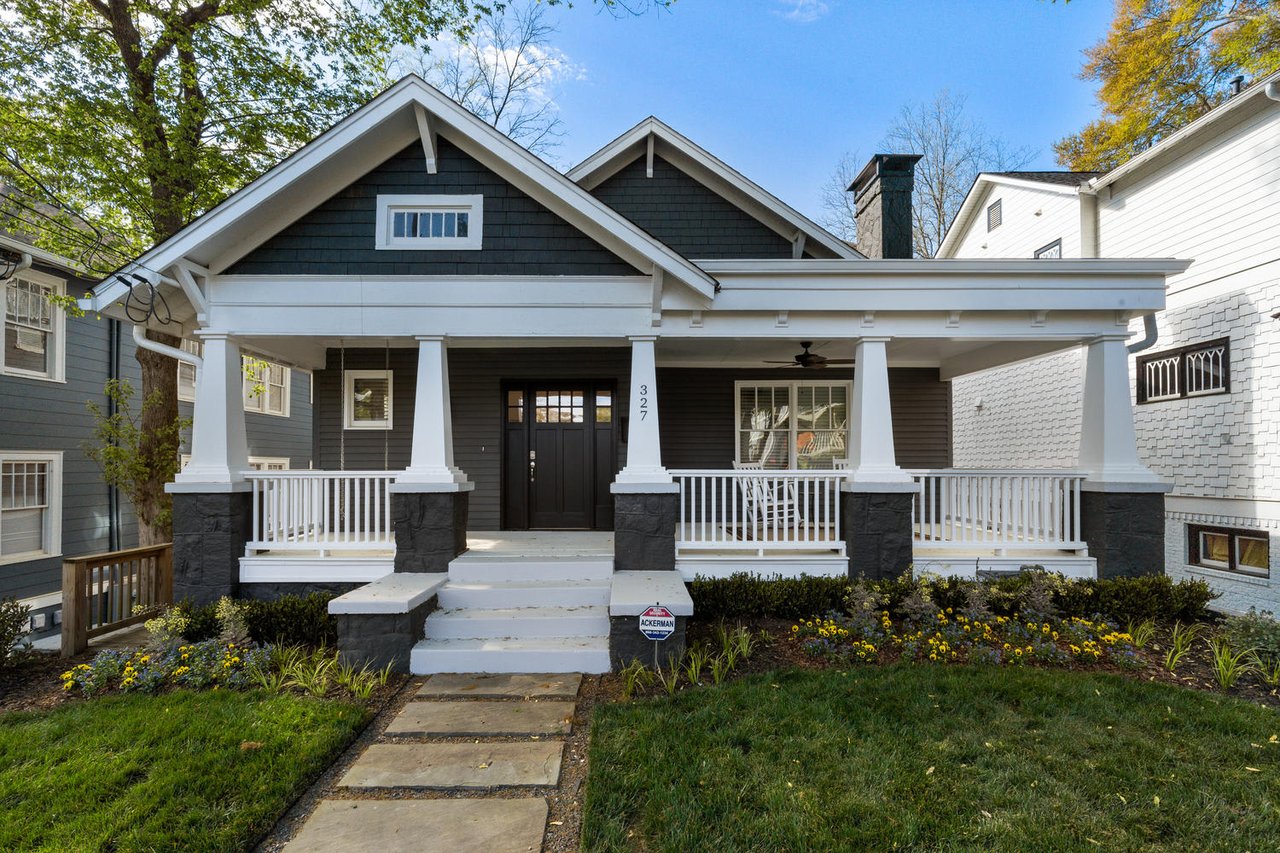
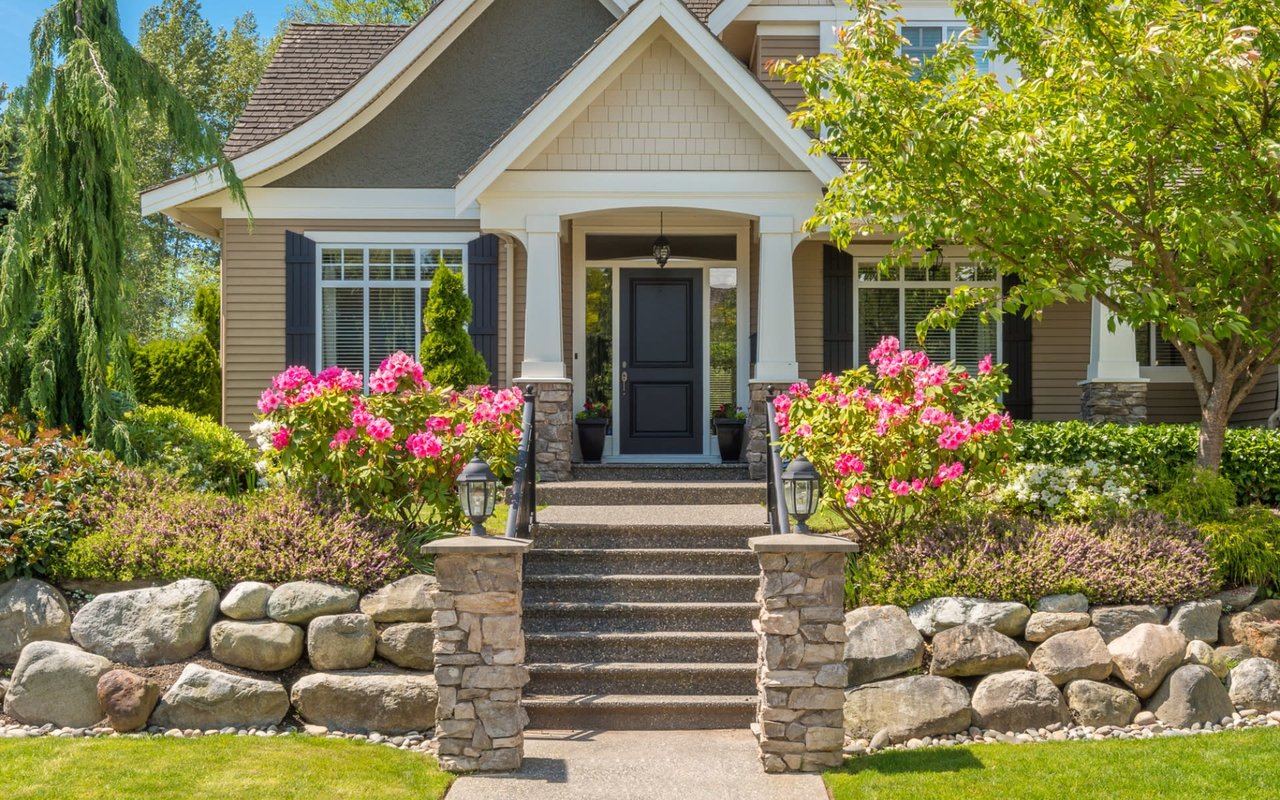
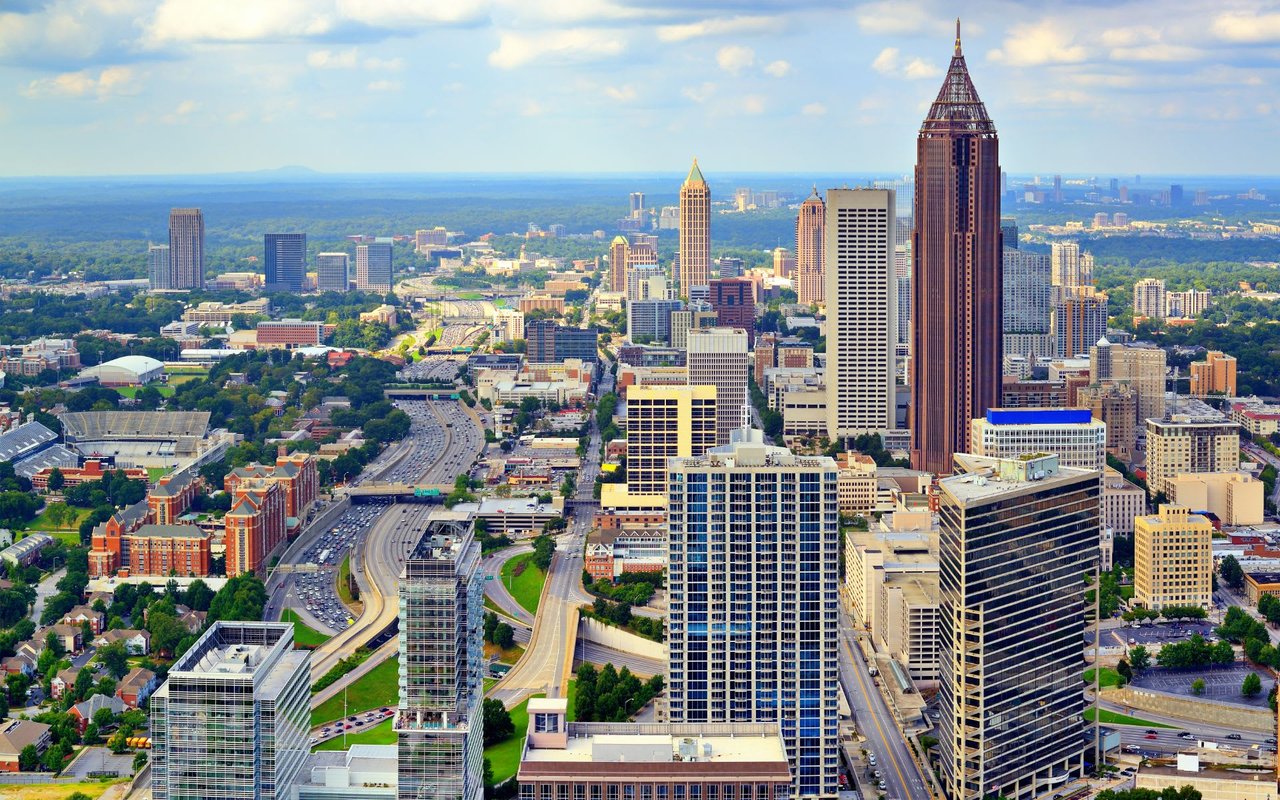
Inman Park was Atlanta's first planned suburb, laid out in the late 1880s at the end of the city's original streetcar line, and it still reads that way — curving streets instead of a grid, deep front yards, and a canopy of hardwoods that makes the whole neighborhood feel about ten degrees cooler than the rest of intown Atlanta in August. Grand Queen Anne Victorians sit shoulder to shoulder with restored Craftsman bungalows, and a few blocks west, the Atlanta BeltLine's Eastside Trail runs along the neighborhood's edge, turning a 140-year-old garden suburb into one of the most walkable addresses in the Southeast.
The people who choose Inman Park tend to be choosing it deliberately. Buyers here have usually looked at Brookhaven, Virginia-Highland, and Grant Park and decided they want something specific: an old house with real architectural bones, a short walk to a serious restaurant, and no need to get in the car for Saturday errands. That draws young professionals, remote workers who want a home office in a turret, and families who value walkability as much as square footage. It is not a neighborhood for buyers who want new construction, wide lots, or a three-car garage — and locals are fine with that.
The social fabric is genuinely local. Krog Street Market functions as the neighborhood's living room. Springvale Park is where dogs and toddlers meet. And every spring, the Inman Park Festival takes over the streets with a tour of homes and a parade that is more eccentric than polished, which is exactly the point. You will also start noticing the two-headed butterfly on flags, gates, and t-shirts — the neighborhood's emblem, one face looking back at its history, the other looking forward.
Inman Park is one of Atlanta's most supply-constrained submarkets, and nearly everything about how it behaves traces back to that single fact. Historic district guidelines sharply limit new single-family infill, so the housing stock barely grows from year to year. When demand rises, it has nowhere to go but into price.
Median home value sits roughly between $768,000 and $1.1 million, though that number hides more than it reveals because the neighborhood really trades as two distinct markets. Condos, townhomes, and loft conversions generally run $350,000 to $600,000+, while historic single-family homes and restored Victorians frequently land between $950,000 and well past $2 million.
Typical Range | Pace | |
|---|---|---|
Condos, townhomes, lofts | $350K – $600K+ | Slower; more buyer leverage |
Historic single-family | $950K – $2M+ | Often under contract in under 14 days |
Neighborhood-wide median | ~$768K – $1.1M | 15 – 24 days on market |
Pace is fast by Georgia standards — homes average about 15 to 24 days on market, and prime single-family listings near the trail routinely go under contract in under two weeks. But "fast" is not the same as "frenzied." The market is moderately competitive rather than uniformly hot. Well-priced detached homes command full asking price and often draw multiple offers, while buyers have real negotiating room on attached units and on anything listed above what the comps support. Roughly 40% of listings take a price reduction before closing, which tells you how much of the market's apparent strength is concentrated in a specific slice of inventory.
The single most important variable is where inside the neighborhood you are standing. Properties within about a quarter mile of the Eastside Trail command a 10–20% premium over comparable homes closer to Moreland Avenue on the eastern edge. That gradient is steep, it is consistent, and it is the reason neighborhood-wide averages are close to useless when you are pricing or bidding on an individual house.
Buying here is a test of preparation more than patience. Because inventory is chronically thin, the good listings do not linger, and the buyers who win are the ones who have already done their homework before the house hits the market.
Expect to compete for well-maintained detached homes within walking distance of the BeltLine or Krog Street Market. Those properties frequently collect multiple offers within days of listing, and sellers' agents screen offers hard on financing strength. Full pre-approval is the floor, not an advantage — cash or fully underwritten loans are what actually differentiate. Attached inventory is a different experience entirely, with more supply, longer marketing times, and room to negotiate on price and terms.
The property types you will encounter fall into a few clear categories. On the historic side, there are late-19th-century Queen Anne Victorians, restored Craftsman bungalows, and American Foursquares, along with a number of grand old homes that were subdivided into multi-family units decades ago and have since been converted back. On the contemporary side, there are loft conversions in former industrial buildings near Krog Street and modern low-rise condos and townhomes along the BeltLine corridor, built at a scale meant to sit politely beside the old stock.
What separates an Inman Park purchase from a typical Atlanta transaction is the due diligence. Two things deserve close attention:
Historic district regulations. Inman Park is a designated City of Atlanta historic district. Exterior modifications, additions, roof changes, and window replacements require a Certificate of Appropriateness from the Atlanta Urban Design Commission (UDC). Savvy buyers write a due diligence period specifically long enough to confirm zoning compliance and understand what the UDC will and will not allow on the property they are about to buy. Assuming a renovation is feasible because it would be feasible elsewhere in the city is the most expensive mistake buyers make here.
Specialized inspections. A 120-year-old house has failure modes a standard inspection checklist does not cover well. Inspection contingencies in Inman Park routinely center on structural integrity and foundation settling, aging galvanized or cast-iron supply plumbing, remnant knob-and-tube wiring, sewer lateral condition, and the state of stone or brick porch piers. None of these are deal-killers on their own. All of them are negotiating leverage if you find them before closing and liabilities if you find them after.
Sellers in Inman Park operate from a position of genuine strength — limited inventory, sustained intown demand, and a neighborhood brand that does a lot of the marketing on its own. But that strength is conditional. It rewards sellers who position correctly and punishes those who assume the neighborhood's reputation will carry a poorly prepared or overpriced listing.
The homes that reach the top of the market are the ones that thread a specific needle: original architectural character preserved and visible — fireplaces, original trim, wrap-around porches, heart pine floors — paired with fully modernized kitchens, updated HVAC and electrical, and a primary suite that meets contemporary luxury expectations. Buyers at the $1M-to-$2M-plus level in Inman Park want the romance of the old house without inheriting its deferred maintenance. Homes that deliver both set the ceiling. Homes that deliver only one get compared to homes that deliver both.
Micro-location does the rest of the work. A home directly along the Eastside Trail or within the central historic core carries a meaningfully higher price per square foot than a structurally identical house on the neighborhood's outer edges. Sellers who understand which sub-pocket they are actually in price accurately; those who benchmark against the whole neighborhood tend to guess wrong in one direction or the other.
Presentation expectations are high, and not just for aesthetic reasons. A large share of Inman Park buyers are relocating from out of state or from other parts of the metro, and their first pass is entirely online. That makes professional staging, accurate floor plans, and video walkthroughs functional necessities rather than luxuries. Staging should emphasize what the house has that new construction cannot replicate: ceiling height, historic detail, and the indoor-outdoor living that porches, courtyards, and mature landscaping provide.
On timing, turnkey properties priced at market typically go under contract in under two weeks. The listings that stall share recognizable traits — overpricing, no off-street parking, or visible exterior work that a buyer knows will require UDC review. Those homes usually require a price correction to re-enter the conversation, and by then they have lost the launch-week urgency that produces clean, competitive offers.
Most buyer advice is generic. These four items are specific to how this neighborhood actually works.
Audit the UDC guidelines before you write the offer, not after. If your plan involves adding a garage, enclosing or reconfiguring a porch, replacing original windows, or building an addition, spend part of your due diligence period with a local architect or historic preservation consultant who has actually taken projects through the Atlanta Urban Design Commission. Work that would be a weekend permit elsewhere in Atlanta can mean months of public review here. Knowing the answer before you commit changes both whether you buy and what you are willing to pay.
Price the micro-location, not the neighborhood. Appraisals get complicated in historic pockets, and appraisal gaps are common when comps are pulled too broadly. A modernized Victorian a hundred yards from the BeltLine and a similar house four blocks east near Moreland Avenue are not comparable properties, regardless of what a search radius says. Insist that your agent build comps from the immediate street grid and sub-pocket, then be prepared to discuss that logic with an appraiser.
Hire an inspector who specializes in intown historic construction. This is the highest-return $200 you will spend. General inspectors are competent, but a specialist knows what active foundation settling looks like versus century-old settled cracks, how to read the condition of brick and stone piers, where knob-and-tube remnants hide, and when a sewer scope is non-negotiable. The report you get will be more useful both for deciding and for negotiating.
Verify parking and easements in writing. Off-street parking is one of the most valuable and least documented amenities in Inman Park. Alley access, shared driveway rights, and parking pads are often governed by informal neighborhood practice rather than recorded rights. Confirm what exists in the legal documents before contingencies clear, because a parking arrangement your seller describes as "how it's always worked" is not a property right.
Pricing an Inman Park home is less about arithmetic and more about understanding how a small, well-informed buyer pool sorts inventory.
Price by tier of finish, not by square footage. Broad price-per-square-foot metrics break down in a historic district where two homes of identical size can be a half-million dollars apart. Buyers here mentally sort homes into three tiers:
Identify your tier honestly before you set a number. Sellers who price a Tier 2 house at Tier 1 money do not get Tier 1 offers; they get silence, then a reduction.
Respect the BeltLine multiplier. Proximity to the Eastside Trail and Krog Street Market behaves less like a linear adjustment and more like an exponential curve. Homes within a three-to-five-minute walk of those hubs routinely support a 10–15% premium over comparable homes deeper in the residential interior. If you have that walk, price for it. If you do not, pricing as though you do costs you the critical first two weeks.
Do not build in negotiating room. This is the most common and most expensive pricing error in Inman Park. Buyers in this market are educated, agent-represented, and tracking intown inventory closely. A listing padded for negotiation reads as overpriced immediately, and a home that passes day 21 without an offer loses its urgency. Those listings are where most of the neighborhood's price drops come from.
Anchor just below search thresholds. Online search filters are the real first showing. Listing at $999,000 rather than $1,025,000 puts your home in front of both the sub-$1M buyer pool and buyers searching upward from $1M — and that dual exposure is what produces the opening-weekend traffic that turns into competitive offers with clean contingencies.
Inman Park's architecture is the reason many buyers choose it, and the styles cluster by era in a way that makes the neighborhood readable street by street.
The bedrock is Queen Anne Victorian and high-style Italianate from the late 1800s — asymmetrical floor plans, steep rooflines, decorative spindlework, ornate turrets, and the deep wrap-around porches that define the neighborhood's streetscape. These are the estate homes along the original streetcar-era streets, and they anchor the top of the market.
Turn onto the side streets and the character shifts to Craftsman bungalows and American Foursquares built between roughly 1900 and 1920. Expect low-pitched gabled roofs, wide eaves with exposed rafter tails, double-hung windows, and substantial brick or stone porch piers. These homes tend to offer the most accessible entry point into detached historic ownership.
Along the BeltLine corridor and near Krog Street, the newest layer is industrial loft conversions and modern condos and townhomes from the 2000s forward. Brick warehouse conversions, glass-and-steel accents, and multi-level townhomes built to respect the historic scale of their neighbors. This is where buyers who want historic-neighborhood walkability without a historic-home maintenance schedule end up.
Inman Park is one of the most genuinely car-optional neighborhoods in Atlanta, with a Walk Score of 87 and a Bike Score of 82. Groceries, coffee, dinner, and a drink are all reachable on foot from most addresses, and the Eastside Trail along the western border provides off-street connections to Old Fourth Ward, Midtown, and Reynoldstown without touching a road.
Transit access is unusually good for an intown historic neighborhood. The Inman Park/Reynoldstown MARTA station (Blue and Green Lines) sits at the south end of the neighborhood, putting Downtown Atlanta five to ten minutes away by train and Hartsfield-Jackson within reach via a transfer at Five Points. MARTA bus routes 6, 102, and 816 run the perimeter avenues.
For commuters, the numbers are straightforward: Downtown is two to three miles, about 10–15 minutes by car, 10 minutes by rail, or 12 minutes by bike trail. Midtown is roughly three miles, 10–20 minutes driving or about 15 minutes on the BeltLine. Buckhead runs eight miles and 20–35 minutes depending on whether you take I-85 or the Moreland/Monroe corridors. Hartsfield-Jackson is about 12 miles, 20–30 minutes by car or roughly 25 by MARTA.
School zoning is a primary driver for family buyers in Inman Park, and the neighborhood sits in one of the strongest intown public tracks in Atlanta: the Midtown High School cluster within Atlanta Public Schools.
Mary Lin Elementary (K–5), just over in Candler Park, is consistently one of APS's highest-performing elementary schools, with a reputation built on strong test performance and an unusually involved parent community. David T. Howard Middle School (6–8) sits right on the Inman Park–Old Fourth Ward line and reopened in 2020 after a major renovation; its location means a meaningful number of local middle schoolers walk or bike to class, which is rare in Atlanta. Midtown High School (9–12), formerly Grady, sits near Piedmont Park and offers rigorous AP and IB coursework, a strong fine arts program, and solid college placement outcomes.
Families weighing private options are within a 10-to-15-minute drive of several well-regarded intown schools, including The Paideia School in adjacent Druid Hills, The Suzuki School for early childhood, and Neighborhood Charter School in Grant Park.
As always, verify current attendance zones directly with Atlanta Public Schools before making a purchase decision — APS boundaries can and do change.
Green space is not an amenity layered onto Inman Park; it was designed into the street plan from the beginning as Atlanta's first garden suburb.
Springvale Park is the historic center of that design — an Olmsted Brothers–planned ravine park with winding paths, a pond, mature hardwoods, and a shaded playground that functions as the neighborhood's default meeting point. Freedom Park, along the northern boundary, is one of Atlanta's largest linear parks, with open meadows, public art installations, and paved multi-use trails that run out toward the Jimmy Carter Presidential Library and Fernbank. The Eastside BeltLine Trail forms the western edge and doubles as a linear park for running, biking, and walking between dining hubs. And Inman Park Village Pocket Park offers a smaller, quieter option for a dog walk when the trail is crowded.
For buyers, the practical takeaway is that outdoor access here is distributed rather than concentrated — most addresses are within a few minutes' walk of at least one of these, which is part of why smaller lots trade well in this neighborhood.
Dining is not a bonus feature in Inman Park. For a significant share of buyers, it is the reason they are here — an epicurean lifestyle where genuinely good food sits at the end of the residential street.
Krog Street Market, housed in a restored 1920s warehouse, is the anchor and functions as the neighborhood's communal dining room, with Fred's Meat & Bread, Superica, and Ticonderoga Club among its draws. From there the scene spreads out in two directions: high-energy patio spots along the BeltLine like BeetleCat and Bread & Butterfly, and quieter, more serious rooms including MICHELIN-recommended Delbar and long-standing neighborhood Italian at Sotto Sotto.
Nightlife skews toward craft cocktails, neighborhood pubs, and open-air patios rather than late-night volume. The Albert, North Highland Pub, and Little Spirit are the kind of places where you run into neighbors. If you want a club district, this is not it — and that is a feature, not an oversight, for most people buying here.
What ZIP code is Inman Park in, and what municipality governs it? Inman Park is primarily in the 30307 ZIP code, within the city limits of Atlanta in Fulton County.
Is Inman Park a local historic district, and how does that affect renovations? Yes. Inman Park is a designated City of Atlanta Historic District. Exterior alterations, major additions, roof changes, window replacements, and new construction require a Certificate of Appropriateness from the Atlanta Urban Design Commission to confirm the work meets district guidelines. Budget for review time, not just construction time.
What does the two-headed butterfly around the neighborhood mean? It is Inman Park's official emblem. The two faces represent the neighborhood's dual identity — one looking back to honor its 19th-century origins, the other looking forward toward community growth.
How much premium does BeltLine proximity actually command? Properties within a three-to-five-minute walk of the Eastside Trail or Krog Street Market typically carry a 10% to 20% price-per-square-foot premium over comparable homes on the eastern edge of the neighborhood.
Are short-term rentals like Airbnb allowed in Inman Park? The City of Atlanta's Short-Term Rental Ordinance requires a license and generally limits operators to their primary residence plus up to one additional property. Separately, many Inman Park condo and townhome communities enforce strict leasing caps or outright short-term rental bans, so the HOA documents matter as much as the city ordinance.
How competitive is the market for a first-time buyer? It depends entirely on property type. Detached historic homes near the trail are competitive and often require cash or fully underwritten financing. Condos, townhomes, and loft conversions move more slowly and offer real negotiating room — which is where most first-time buyers find their entry point into the neighborhood.
Why do so many listings take price reductions if the market is strong? Because the strength is concentrated. Turnkey, well-located detached homes sell fast at or above asking. Homes that are overpriced, lack off-street parking, or need exterior work subject to UDC review sit — and roughly 40% of inventory takes a reduction before closing. It is a market that rewards accurate pricing rather than aggressive pricing.
Inman Park is a neighborhood where the details decide the outcome. Whether a porch modification will clear the UDC, whether a home is three minutes or eight minutes from the trail, whether an inspector knows what a settled pier looks like versus an active one — these are the things that separate a purchase you are happy with in five years from one that becomes a project you did not sign up for. The same is true on the sell side, where the difference between accurate pricing and optimistic pricing is usually measured in weeks on market and tens of thousands of dollars.
Katie McGuirk and Kelly Ruddell of The Katie & Kelly Team work throughout Atlanta's luxury and intown markets, tracking neighborhood-level data — active listings, recent closings, off-market activity, and emerging development — at the sub-pocket level that a market like Inman Park requires. Their clients describe them the same way across the board: responsive, detail-obsessed, and straightforward about what a property is actually worth rather than what it would be nice for it to be worth. If you are weighing a move, they will tell you what the comps support and where the risks are before you commit.
If you are considering buying or selling in Inman Park — or you are simply trying to understand how the neighborhood compares to Candler Park, Old Fourth Ward, or Virginia-Highland before you narrow your search — reach out for a conversation. No pressure, no obligation, just a clear read on the market from people who work in it every day.
The Katie & Kelly Team
Email: [email protected]
Phone: (404) 808-0881
There's plenty to do around Inman Park, including shopping, dining, nightlife, parks, and more. Data provided by Walk Score and Yelp.
Explore popular things to do in the area, including Bridge Boutique, Mint By Sandpiper, and Emily Cuts Hair.
| Name | Category | Distance | Reviews |
Ratings by
Yelp
|
|---|---|---|---|---|
| Shopping | 0.19 miles | 0 reviews | 0/5 stars | |
| Shopping | 0.2 miles | 0 reviews | 0/5 stars | |
| Beauty | 0.23 miles | 0 reviews | 0/5 stars | |
| Beauty | 0.53 miles | 0 reviews | 0/5 stars | |
| Beauty | 0.76 miles | 0 reviews | 0/5 stars | |
|
|
||||
|
|
||||
|
|
||||
|
|
||||
|
|
||||
|
|
Inman Park has 2,868 households, with an average household size of 2. Data provided by the U.S. Census Bureau. Here’s what the people living in Inman Park do for work — and how long it takes them to get there. Data provided by the U.S. Census Bureau. 5,282 people call Inman Park home. The population density is 12,900 and the largest age group is Data provided by the U.S. Census Bureau.
Total Population
Population Density Population Density This is the number of people per square mile in a neighborhood.
Median Age
Men vs Women
Population by Age Group
0-9 Years
10-17 Years
18-24 Years
25-64 Years
65-74 Years
75+ Years
Education Level
Total Households
Average Household Size
Average individual Income
Households with Children
With Children:
Without Children:
Marital Status
Blue vs White Collar Workers
Blue Collar:
White Collar: