If you have ever driven through Ansley Park and wondered why the homes feel so memorable, the answer is not just size or setting. It is architecture. In this neighborhood, the shape of a roofline, the placement of a front door, and the way a house sits on its lot all help define its appeal and long-term value. If you are buying or selling here, understanding those details can help you see a home more clearly. Let’s dive in.
Why architecture matters in Ansley Park
Ansley Park stands apart because it was planned as one of Atlanta’s earliest intown suburbs, with wide winding streets, green spaces, and distinctive homes rather than a one-style subdivision. Historic documentation describes roughly 275 acres, about 600 houses, several apartment buildings, and a church, all set within a curving street network shaped by rolling topography.
That planning still matters today. The neighborhood’s broad boulevards, curvilinear blocks, and park-like setting create a backdrop where architecture is especially visible. In Ansley Park, you are not just evaluating a house. You are also evaluating how that house contributes to a larger streetscape.
Another important point is variety. Ansley Park is known for an eclectic mix of early 20th-century houses and apartments, which means you will see several architectural styles often standing side by side. That mix is part of the neighborhood’s charm and one reason design-aware buyers are drawn to it.
Tudor homes in Ansley Park
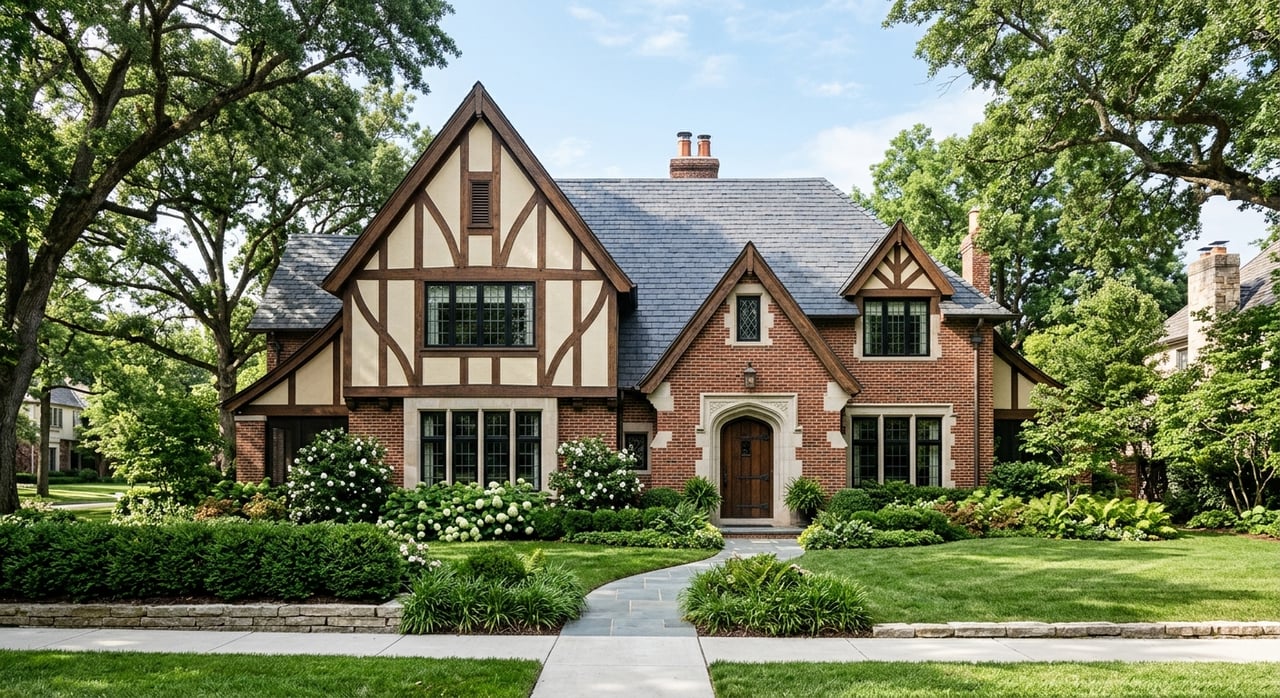
Tudor, also described in historic records as English Vernacular Revival, is one of the neighborhood’s most recognizable styles. These homes often feature steep gables, asymmetrical facades, decorative half-timbering, masonry veneer, tall narrow windows, and prominent chimneys.
In Ansley Park, examples include homes at 262 The Prado, 102 Maddox Drive, and 211 The Prado. Earlier documentation also notes examples on Seventeenth Street and Peachtree Circle. Even if you do not know the style name at first glance, you will usually recognize the storybook feel.
For buyers, Tudor homes often offer strong curb appeal and a romantic old-world presence. For sellers, those same defining features can be a major asset when they have been preserved well. Rooflines, chimneys, and window proportions are central to the look, so changes to those elements tend to have an outsized impact.
What to notice in a Tudor home
When you walk a Tudor home in Ansley Park, pay close attention to exterior proportions. The gables, chimney placement, and window shape do a lot of the architectural work.
If the home has been updated, look at whether those original cues still read clearly from the street. A well-handled renovation usually respects the steep roof form and keeps additions visually secondary.
Italian Renaissance Revival homes
Italian Renaissance Revival is less common in Ansley Park, but it is one of the neighborhood’s most elegant architectural expressions. Historic documentation identifies only a few examples, including 1 Peachtree Circle, 200 Peachtree Circle, and 178 Fifteenth Street.
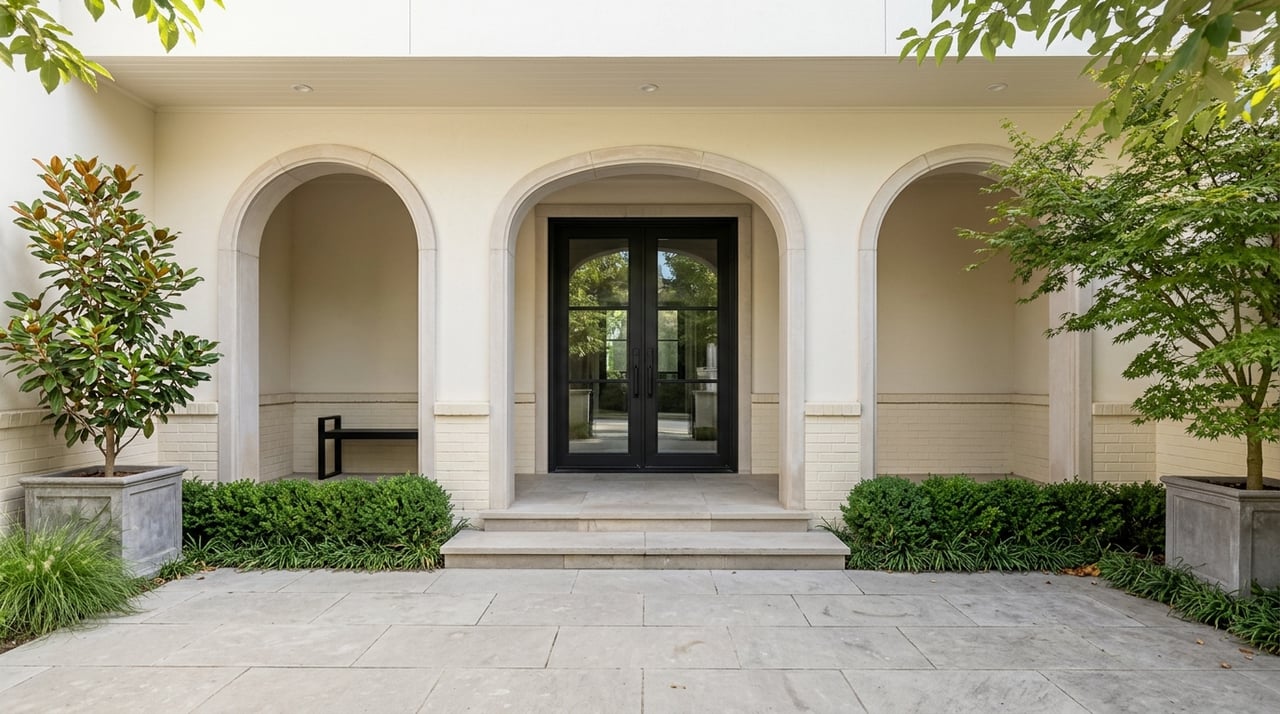
This style is typically defined by low-pitched hipped roofs, clay tile, wide eaves with brackets, stucco or masonry walls, classical detailing, and arched openings or porch-loggia compositions. In Ansley Park, 1 Peachtree Circle by Walter T. Downing is one of the clearest examples.
These homes often feel formal, balanced, and graceful. They also tend to be detail-sensitive, because roof material, stucco condition, and symmetry are so visible. For a buyer, that means beauty and maintenance often go hand in hand.
What to notice in Italian Renaissance homes
Look first at the overall composition. These homes tend to rely on symmetry and restrained ornament rather than dramatic vertical lines.
Then look at materials. Stucco, clay tile, and classical trim details help define the style, so condition and continuity matter if you are evaluating updates or future work.
Colonial Revival and Federal Revival homes
Colonial Revival is one of Ansley Park’s anchor styles. It is generally marked by symmetry, a central entrance, fanlights and sidelights, columns or pilasters, and classical cornice details.
Examples in the neighborhood include 186 Fifteenth Street, 218 Fifteenth Street, 17 Inman Circle, and 273 The Prado. These homes often appeal to buyers who want a traditional look that feels composed and timeless.
Federal Revival appears less often, but it adds another layer to the neighborhood’s architectural depth. Historic records point to 162 Peachtree Circle as an example, with its lighter classical detailing, fanlight, and slender pilasters.
What to notice in Colonial and Federal homes
These styles depend heavily on facade balance. If you are comparing homes, notice whether the centered entrance and overall symmetry remain intact.
Thoughtful updates usually keep that sense of order. When exterior changes interrupt the balance, the home can lose some of the character that makes the style so appealing.
Craftsman and smaller historic homes
Ansley Park is not made up only of grand revival houses. Historic documentation also identifies Craftsman bungalows, American Small Houses, English cottages, and American Foursquares, especially in the northern and eastern parts of the neighborhood.
Examples include 85 East Park Lane, 65 Avery Drive, and 109 Avery Drive. These homes are typically smaller in scale, with low-pitched roofs, broad porches, exposed rafter tails, grouped windows, and simpler massing.
For many buyers, this can be part of the neighborhood’s appeal. You still get historic character, but in a format that may feel more approachable or easier to maintain than one of the larger estate-style homes.
What to notice in Craftsman homes
On a Craftsman home, the porch often carries the style. Exposed rafters, grouped windows, and roof shape also play an important role.
If those elements have been changed too aggressively, the home can lose much of its original personality. Buyers planning updates should think carefully about preserving the features that give the house its identity.
The wider mix adds character
One of the most interesting things about Ansley Park is how broad the style mix really is. Historic records also identify Queen Anne, Neoclassical Revival, Spanish Colonial Revival, Dutch Colonial Revival, French Vernacular Revival, Prairie School, and occasional International-style examples.
That variety means many homes do not fit into one simple box. A house may have a bungalow form with Colonial Revival detailing, or a more classical plan with Renaissance-inspired finishes. In Ansley Park, the overall composition often matters just as much as the label.
How lot placement shapes the look
Architecture in Ansley Park is not only about the house itself. The lot pattern is a major part of the neighborhood’s visual identity. Historic documentation describes lots as generally narrow but deep, with larger lots on primary streets and at major intersections and smaller lots on secondary streets.
Front yards are landscaped as part of a park-like streetscape, while backyards sit farther from public view. That arrangement helps explain why homes here feel so composed from the street. The relationship between house, lawn, and road is part of the design story.
For buyers and sellers alike, this matters when evaluating updates. Homes that preserve their street-facing massing and landscape composition often feel more aligned with the neighborhood’s original character than homes with dominant front-facing changes.
Renovation questions buyers should ask
If you are considering a home in Ansley Park, style should shape the questions you ask. A Tudor home may be most sensitive to changes in roof pitch, gables, chimneys, and window proportions. An Italian Renaissance home may depend more on low hipped roofs, stucco, and classical symmetry.
Colonial and Federal houses often rely on centered entrances and balanced facades. Craftsman homes tend to lose character quickly when porches, rafters, or window groupings are altered too much. In each case, the key is whether the home’s defining features still read clearly.
A practical way to compare homes is to ask:
- What style is this house meant to express?
- Which original exterior features still remain?
- Have later changes supported or weakened the curb appeal?
- If you plan exterior work, what city review may be required?
What to know about preservation review
In Atlanta, exterior work on a designated historic or landmark property requires a historic-preservation permit called a Certificate of Appropriateness, in addition to the normal building permit. The City of Atlanta states that the scope of work determines whether that approval is needed.
The city also advises owners to verify a property’s designation status through the GIS property map and to consult Chapter 20 of the municipal code for the applicable rules. For buyers, that means renovation assumptions should be checked property by property rather than neighborhood-wide.
Ansley Park also sits within the city’s Urban Conservation Area, where planning guidance calls for growth that remains modest and compatible with neighborhood scale, tree canopy, and historic character. The 2025 neighborhood conservation study echoes that same idea, emphasizing future change that respects original design and preserves historic streetscapes.
Why these styles hold long-term appeal
Ansley Park’s appeal comes from more than age alone. The neighborhood still reads as an intact early 20th-century suburb, with mature landscaping, parks, and a street pattern that gives it a distinct sense of place.
It also carries notable architectural pedigree. Historic documentation connects the neighborhood to important Atlanta architects including Neel Reid, Philip T. Shutze, Walter T. Downing, Anthony Ten Eyck Brown, and Henry Hornbostel.
For many buyers, long-term appeal comes down to three durable traits: original architecture, landscape setting, and neighborhood planning. Interior finishes can change over time, but homes that retain their proportions, materials, and relationship to the street often continue to feel the most compelling.
If you are buying in Ansley Park, it helps to look beyond surface updates and focus on the bones of the house. If you are selling, it helps to understand which details truly define your home’s presence. That kind of neighborhood-specific perspective can make all the difference in a market where architecture is part of the value story.
If you are thinking about buying or selling in Ansley Park, The Katie McGuirk Team offers thoughtful, high-touch guidance tailored to Atlanta’s most design-sensitive neighborhoods.
FAQs
What architectural styles are most common in Ansley Park homes?
- Ansley Park is known for a mix of Tudor, Italian Renaissance Revival, Colonial Revival, Federal Revival, Craftsman, bungalow, American Small House, and other early 20th-century styles.
What makes Tudor homes in Ansley Park distinctive?
- Tudor homes in Ansley Park often feature steep gables, decorative half-timbering, tall narrow windows, masonry veneer, and prominent chimneys.
Are all homes in Ansley Park large historic estates?
- No. In addition to larger revival-style homes, the neighborhood also includes smaller Craftsman bungalows, English cottages, American Foursquares, and later small-house forms.
What should buyers review before renovating an Ansley Park home?
- Buyers should identify the home’s defining architectural features, review how previous changes affect curb appeal, and confirm whether proposed exterior work may require city historic-preservation approval.
Do exterior changes in Ansley Park ever require city review?
- Yes. According to the City of Atlanta, exterior work on a designated historic or landmark property requires a Certificate of Appropriateness in addition to the normal building permit, depending on the scope of work.
Why does architecture affect value in Ansley Park?
- Architecture matters because Ansley Park’s long-term appeal is tied to original design, landscaped streetscapes, and the neighborhood’s intact early suburban planning pattern.